#16DaysOfActivism - Human Rights and Migration Policy: an increasing divide
By Maria Monserrat Escudero and Dolores Modern
Human Rights in context
This year, commemorating Human Rights day is critical.
The Human Rights Framework guided governments, policymakers, and societies in general for decades, enshrining the value of human life, dignity and compassion beyond borders. Alarmingly, this consensus is now being challenged globally. In the UK, we can see this clearly with the pledge by some MPs to scrap the Human Rights Act and leave the European Convention on Human Rights. But we don’t need to go this far to put Human Rights at risk. By demonising migration, this government is fuelling the narrative that questions whether we are all deserving of rights and entitlements.
Human Rights are interlinked, and most importantly, inherent to every human being. By alienating certain groups of people from their fundamental rights, we are stripping them from their humanity. In the context of the 16 days of activism, where the importance of eradicating violence against women and girls is in the spotlight, the interconnectedness of Human Rights comes into centre.
The dehumanising effect of the hostile immigration environment
The cruelty of the current hostile environment migrants, asylum seekers and refugees are living in cannot be overstated. Our communities have progressively seen their vulnerability increase for years. And when we thought things could not get much worse, a government many of us had put our hopes in, turned on us.
Migrants have become the scapegoats for state failings of all kinds. We are to blame for the housing crisis, for austerity impacting the working class, for salaries falling and working conditions worsening. There is no evidence that shows that migration has caused any of these issues, or that reducing migration would fix them. However, the idea that migrants, asylum seekers and refugees are impoverishing the UK by taking from British citizens is spun across media, parliamentary debates, and now at dinner tables.
The purpose of these narratives is not to fix the root causes of the issues facing the UK. They are used and exploited to create division, cover failings and gain political support in a context of crisis and concern. These narratives and the policies that derive from them are also an extension of the colonial project, which extracted from and exploited ‘othered’ populations. Now, we see it happening within the UK borders by allowing for the dehumanisation of human beings who have made this country their home, however temporarily.
The real life impact of dehumanising migrants
The downgrading of the Human Rights framework and the narratives that enable this affect everyone. A mother might be afraid to speak to her child in her own language in public. A child might face bullying at school. A worker might fear reporting their employer for abusing their rights. A student might choose not to continue pursuing their education in the UK for fear of violence. This creates a fragmented society, where fear seeps into communities and erodes the trust and solidarity that hold us together. It also opens the door to further curtailing of rights.
For those most at risk, including the women we work with who are survivors of gender-based violence, trafficking, and exploitation, this context makes it even harder to access support, justice, and redress. These women, who are often experiencing intersecting issues related to structural racism and class discrimination, are being systematically failed by this government from multiple fronts. They are the very people the government claims to want to protect.
Migrants Rights and Women’s Rights are Human Rights
There are no humans less deserving of a dignified life. Violence against women and girls will not be eradicated if we, as a society, marginalise women who, due to their immigration status, are subjected to institutional violence and discrimination. The idea of “earning” Human Rights through, for example, increasingly complex conditions for settlement, goes against the commitments this country has taken to abandon the colonial project and become a firm supporter of the advancement of all peoples.
In this context, communities and solidarity networks are taking the role of the state and protecting those most vulnerable. However, charities and communities alone cannot revert the consequences of these curtailments.
But we refuse to lose hope. When in crisis, humanity has thrived by strengthening community bonds, and pulling each other up. The UK was once a leading voice in the adoption of Human Rights globally, being the first nation to ratify the European Convention of Human Rights. We need a government that can take up the mantle, refusing to be blinded by short-term political gain, and steps up to the challenges facing our times.
Everyone deserves to live in dignity. A fair immigration system that offers equal and real protections is the only way to guarantee Human Rights.


Another Autumn Budget, Another year of uncertainty for VAWG services and victim-survivors
Thursday, 27 November 2025
Yesterday’s budget did not mention Violence Against Women and Girls (VAWG) once – a glaring omission at a time when demand for specialist support is at record levels and victim-survivors have a 60% chance of being turned away from refuge, primarily due to lack of space and the No Recourse to Public Funds condition. Despite a manifesto commitment to halve VAWG, the government’s Budget has provided no new funding for the specialist organisations supporting victim-survivors of VAWG and their children.
With rising demand, higher operational costs, Police and Crime Commissioner (PCC) funding cuts, a cost-of-living crisis, and the impact of a previous National Insurance increase, services already under immense strain now face even greater financial pressure. For VAWG organisations delivering life-saving support, this picture means longer waiting lists, reduced support, and in some areas, the real risk of services shutting down entirely. We have already seen 3 Rape Crisis Centres close in the last 12 months, and they remain – as almost all other women’s services do – unsure about their future beyond the end of this financial year.
While we welcome the scrapping of the two-child limit, which also means an end to women needing to 'prove' they were raped in order to qualify for the exemption on the benefit cap, the government’s failure to include support for victim-survivors in the budget is devastating for the thousands of women and children who rely on specialist trauma-informed support every day. It also has significant implications for our economy, productivity, and broader quality of life, if those seeking safety, justice and recovery after experiencing violence cannot secure the support they need, and rebuild their lives.
The government’s continued imposition of short-term, fragmented funding for VAWG services is actively hindering its own commitment to halve VAWG within a decade and undermining frontline work. While the entirety of the VAWG sector is affected, the impact is particularly severe for smaller, specialist ‘by and for’ organisations supporting Black, minoritised and migrant women. These services are six times less likely to receive government funding and operate at a 39% shortfall in funding1, despite generating more than £42 million in public savings each year. Chronic underfunding, combined with a hostile and anti-migrant political environment and increasingly competitive funding systems, continues to place them at severe structural disadvantage.
“‘We've always been in survival mode since 2012, when the austerity measures kicked in and our local authorities stopped funding us [...] The current situation is literally getting us from one year to the next year to the next year’...”
Evidence shows 67% of Black, minoritised and migrant victim-survivors want ‘by and for services’. These services are not optional add-ons; they are essential, life-saving -and in many cases, the only safe and accessible spaces equipped to provide holistic support to some of the most vulnerable victim-survivors. Yet far too many specialist organisations remain locked out of fair and accessible funding.
As the representatives of leading women's sector organisations, we are yet to see the things we know are needed - long-term, secure funding for all women, including those with No Recourse to Public Funds and recognition and support for Rape Crisis Centres.
Ahead of the publication of the VAWG strategy, we urge the government to:
- Commit a minimum of £502 million of investment in specialist domestic abuse organisations, which should include £222m for refuge services and £280m for community-based services.
- Create national ring-fenced funding for specialist VAWG organisations, including ‘by and for’ services, in line with the Domestic Abuse Commissioner’s recommendations, including £158.3 million in ring-fenced for Black and minoritised, deaf and disabled, and LGBT+ victim-survivors, and £63.5 million per annum in dedicated funding for victim-survivors with No Recourse to Public Funds.5
- Urgent continuation and substantial increase of the Rape and Sexual Abuse Support Fund (RASASF) fund, with appropriate year on year uplifts, over a 4-year period in line with other commitments.
- Replace short-term, fragmented funding with stable, multi-year funding allows services to plan, retain skilled staff, and meet increasing demand.
- Reform competitive funding and commissioning models to ensure equitable access for all specialist organisations, recognising the distinct role played ‘by and for’ services and the structural inequalities they face.
Without sustainable investment, life-saving VAWG services will continue to operate on the brink, and the government’s commitment to ending VAWG will remain unmet. Victim-survivors deserve better, and specialist organisations cannot continue to shoulder this responsibility without the resources required to keep women and children safe. 




Sources:
[1] https://www.womensaid.org.uk/wp-content/uploads/2024/07/Unsuccessful-referrals-into-refuge.pdf
[2] https://southallblacksisters.org.uk/submissions-campaigns/investing-in-safety/
[3] https://www.imkaan.org.uk/home-affairs-committee-report-response-funding-vawg

LAWRS supports the statement on the weaponisation of VAWG
The statement has been co-ordinated by organisations including End Violence Against Women Coalition, Women for Refugee Women, Hibiscus, Southall Black Sisters and Asylum Matters, and is endorsed by Imkaan and the Step Up Migrant Women Coalition:
--
In the last weeks, we have seen how vital conversations about violence against women and girls (VAWG) are being hijacked by an anti-migrant agenda that fuels division, harms survivors and ultimately impedes the real work of tackling the root causes of society-wide violence, to the detriment of women and girls. We write as organisations on the frontlines of combatting VAWG to urge the Government to address this dangerous narrative.
We condemn all acts of violence against women and girls and the immense harm which such acts cause to individuals and communities. The facts about violence against women and girls in the UK are stark:
-
Almost one in three women will experience domestic abuse, and sexual offences are at the highest level recorded.
-
Two women a week in the UK are murdered by a partner or ex-partner.
-
More than 90% of perpetrators of rape and sexual assault are known to their victims.
-
One in two rapes against women are carried out by a partner or ex-partner.
-
One in three adult survivors of rape experience it in their own home.
-
Women who can’t access public funds, such as welfare support or housing assistance - due to No Recourse to Public Funds conditions - are three times more likely to experience VAWG.
We have been alarmed in recent weeks by an increase in unfounded claims made by people in power, and repeated in the media, that hold particular groups as primarily responsible for sexual violence. This not only undermines genuine concerns about women’s safety but also reinforces the damaging myth that the greatest risk of gender-based violence comes from strangers.
Every act of VAWG is a form of injustice. It is an injustice that violence against women and girls is carried out in our workplaces, in our schools, in our streets and most commonly, in our homes. It is an uncomfortable reality that it is committed in every economic group, ethnicity, age and social group, and overwhelmingly by the men who are in women and girls’ lives. VAWG is also perpetrated by people who move to the UK, but the racist idea that this is solely an imported problem flies in the face of women and girls’ daily experiences in the UK.
These horrifying facts must be addressed with sustainable investment in prevention and support services, and by removing state-imposed barriers to support for survivors. Instead, the issue is being hijacked by people seeking to use women and girls’ pain and trauma - and the threat of it - for political gain.
Over recent weeks, people claiming to care about the “safety of women and children” have left families, women and children living in temporary asylum accommodation afraid to leave their front door. They follow in the footsteps of the rioters who used the appalling murder of three young girls as an excuse to bring violence to our streets; with targeted attacks against migrant, minoritised and Muslim communities. That two out of five of those arrested for that disorder themselves had police histories of domestic abuse illustrates not only the pervasiveness of gender-based violence but the disingenuous nature of many of those who claim to have the interests of women and children at heart. Meanwhile, members of Parliament freely share false statistics about the nationality of perpetrators. Government ministers have even endorsed some of this summer’s demonstrators as having ‘legitimate’ concerns, which risks normalising and enabling the spreading of racist narratives by the far-right.
Not only do these falsehoods fail to keep women safe, they serve as a racist distraction that actively impedes the urgent work of addressing gender-based violence. Myths and misconceptions about sexual violence act as a barrier to justice for survivors. Spreading an inaccurate picture of VAWG in the UK allows the people - overwhelmingly men, from all walks of life - who harm women and girls to hide behind racial stereotypes and scapegoating. Meanwhile, hostile immigration policies propped up by this misinformation put many of the most marginalised women and survivors in the UK - racialised, migrant, refugee and asylum-seeking women - at even greater risk of harm, destitution, homelessness, exploitation and criminalisation.
The government has pledged to halve violence against women and girls. This is a challenging but achievable ambition, but it cannot be done while lies about its causes are endorsed by those in the highest positions of power - Parliament and the media - and allowed to spread unchecked.
We urge the Government to show leadership in responding to the weaponisation of VAWG, including changing its framing of migration, promoting an accurate picture of violence against women and girls, and holding those who spread misinformation to account. We cannot afford for this agenda to drive further attacks on migrant communities or harm efforts to develop a coherent, effective strategy to address the real causes of gender-based violence. All women and girls deserve for us to face and confront the reality of VAWG, so that we can pave the way in ending it.
Labour’s immigration policy and LAWRS
The Immigration White Paper
In May this year, the UK Government released its Immigration White Paper, outlining a series of proposed changes to immigration policy. These proposals have created widespread uncertainty and fear among migrant communities — feelings that persist today, as many details remain undecided.
The direction taken by the government is deeply concerning. Rather than dismantling the hostile environment created under previous Conservative governments, it seeks to entrench and expand it — to the detriment of society as a whole.
The proposed measures are, and will continue to be, particularly harmful to migrant women — especially those who are survivors of gender-based violence, trafficking, modern slavery, and exploitative or unsafe working conditions.
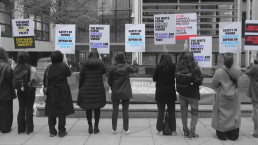
LAWRS, together with partner organisations Southall Black Sisters, Hibiscus and EVAW, joined by 100+ organisations, are fighting these cruel policies. We have released a response outlining how they will harm migrant women and concluded with a protest outside of the Home Office on the 15th of October. However, we know that this will be a long fight — one that will require sustained collective action, solidarity across movements, and a continued commitment to centring the voices and leadership of migrant women.

Why are we so concerned?
Mainstreaming the far-right in immigration policies
The White Paper marks a dangerous and racially discriminatory escalation which scapegoats immigrants, not austerity, for economic and social deprivation. The government is mainstreaming far-right rhetoric, using this to inform reactionary policy-making at a time when violence against immigrants, asylum-seekers and refugees is increasing.
This is evident not only in the White Paper, but in subsequent statements from the Prime Minister and other members of his cabinet, as well as in the government’s failure to condemn the actions of far-right groups who are targeting migrants and people seeking asylum.
Migrant victim/survivors of domestic abuse
The government has pledged to halve gender-based violence in 10 years. Yet in its White Paper, it fails to address the vulnerability of migrant women survivors of VAWG. Frontline services such as LAWRS support migrant women whose inability to access mainstream refuges, financial support, stable housing or quality legal advice prevents them from fleeing domestic abuse and rebuilding their lives. Existing protections, such as the Migrant Victims of Domestic Abuse Concession (MVDAC) and Domestic Violence Indefinite Leave to Remain (DVILR) are extremely limited, and cover only a limited number of women with insecure immigration status.
Moreover, the risk of statutory services, including the police, sharing information with immigration enforcement is directly weaponised by perpetrators, deterring reporting and access to protection. Individuals who are now in government have previously emphasised the critical need for a firewall between immigration enforcement and the police. Despite this, commitments to remove these barriers have not been followed through, and protections remain unavailable for most migrant victim/survivors.
Labour market and immigration
This government continues to devalue what they frame as “low-skilled” roles overwhelmingly held by migrant women in the UK. This includes care work, cleaning and support services, where essential workers already lack fair conditions and robust protections. The decision to scrap care worker visas is particularly alarming and risks collapsing an already fragile sector.
We are alarmed that genuine workforce planning and sectoral investment are being replaced with a reliance on migrant women workers as temporary stopgaps for labour shortages. By restricting their access to long-term stability and settlement, these policies force workers to accept poor conditions and deepen dependency on partners or employers, increasing the risk of abuse and exploitation
We also wholly reject the government’s framing of immigration control as a means to address labour exploitation. This narrative misrepresents the root causes of abuse in the labour market and instead targets the victims/survivors, rather than the exploitative employers who profit from their precarity.
Criminalisation of victim/survivors
In the UK, most women in prison or under community supervision have experienced abuse or exploitation. For vulnerable migrant survivors, criminality often results from coercion or economic precarity. As expressed above, migrant women also face barriers to report abuse and exploitation, meaning they slip through the cracks before later coming into contact with the criminal justice system. Automatic deportation and accelerated removals will prevent survivors from pursuing meaningful justice and rebuilding their lives.
Urgent priorities for action
The Government faces an urgent choice: to continue bolstering far-right ideology or to take immediate action to protect migrant victims/survivors. We call on the Government to:
- Abandon the UK Government’s Immigration White Paper (May 2025), which harms victim/survivors of VAWG, trafficking and modern slavery.
- Implement safe reporting mechanisms.
- End the criminalisation of victim/survivors of VAWG, trafficking and modern slavery.
- Fully repeal the Illegal Migration Act (2023) and the Nationality and Borders Act (2022).
- Tackle systemic racism and structural inequalities.
- Centre and provide ring-fenced funding for by and for organisations.
- Extend the combined MVDAC-DVILR model to all victim/survivors regardless of immigration status.
Press release: Home Office Review on data-sharing on migrant victims is not fit for purpose, say women’s rights and civil liberties groups
Southall Black Sisters (SBS), Latin American Women’s Rights Service (LAWRS) and Liberty have condemned the Government’s refusal to institute a firewall that would protect victims and witnesses of crime.
Liberty and SBS filed the first ever police super-complaint in December 2018, over the systematic sharing of victim data with immigration enforcement. The super-complaint, accompanied by 50 pages of evidence, showed that this practice was preventing victims of crime, particularly migrant women, from speaking to the police and putting them at risk.
In response, police watchdogs, HMICFRS, the College of Policing (CoP) and the Independent Office for Police Conduct (IOPC) called for immediate action to stop this practice. Their report made clear that data-sharing acted as a deterrent to victims reporting crime, and that data-sharing caused significant harm to the public interest because of victims’ inability to seek protection or justice.
Today, Wednesday 15 December, the government announced the outcome of a Home Office Review[1] on data sharing between the police and Immigration Enforcement concerning migrant victims and witnesses of crime. The review makes no reference to police watchdogs’ response to SBS’ and Liberty’s super-complaint.
Pragna Patel, director of Southall Black Sisters said: “As organisations that work with some of the most vulnerable and deprived migrant victims of domestic abuse, we reject this Review and its findings.
This Review is the outcome of three years of engagement with the Home Office that has proved itself to be untrustworthy. We have been compelled to engage in meaningless consultations and meetings on data sharing with the Home Office (which we did in good faith) only to be told that the immigration system – in its present cruel, discriminatory and inhuman form – must be maintained at any cost. It makes us question not only the Home Office’s dubious claims to support all victims of abuse but also the very purpose of police-super-complaints mechanism since the outcomes are casually disregarded by the very institutions that we seek to hold accountable.”
Gisela Valle, director of the Latin American Women’s Rights Service said: “We are deeply disappointed to see that once again immigration enforcement takes precedence over the security and support needs of survivors of domestic abuse. It is contradictory for the Police and the Home Office to reiterate that survivors of domestic abuse are treated as a victim first and foremost but only insofar as it doesn’t affect the enforcement of immigration laws. Considering the ample evidence of the manipulation of survivors’ insecure immigration status by perpetrators of domestic abuse, we consider prioritising immigration enforcement over the safety of victims the state amounts to complicity in the coercion and control of migrant victims of domestic abuse.”
Liberty lawyer Lara ten Caten said: “It has never been clearer than during the pandemic – when countless people have been shut off from health services due to the risk of having their health data shared with immigration enforcement – that this practice puts lives at risk.
“The super-complaint brought by Liberty and Southall Black Sisters sought a firewall between police and the home office for immigration enforcement purposes so that victims and witnesses of crime would feel safe in coming forward. This decision by the Home Office not to implement a firewall ignores or plays down the fact that routine police discrimination already makes it harder, even dangerous, for people from marginalised backgrounds to interact with the police. This practice actively puts them, and everyone in society, at risk of crime.
“No one is safe until everyone is safe. We urge the government to reconsider their decision and implement a firewall.”
Pragna Patel, director of SBS, and Gisela Valle, director of LAWRS, added: “The Home Office is trying to re-brand Immigration Enforcement as a ‘safeguarding’ service when data sharing is a key plank of the Government’s hostile environment policy - which we say must be scrapped. This is why we strongly disagree with the proposal to create an Immigration Enforcement Migrant Victims Protocol which will in fact consolidate the sharing of domestic abuse victims' data between the police and immigration enforcement as a standardised practice across all police forces nationally. Safeguarding is clearly incompatible with the Home Office’s immigration enforcement role which is its primary purpose.
The Government told us that it was committed to a full review of the ‘hostile or compliant’ environment following the Windrush Lessons Learned Review, but the outcome of the Home Office Review provides further evidence of its unwillingness to soften, let alone dispense with, the harmful and discriminatory impact that its immigration policies have on those who are most in need of protection. The impact of data sharing has been particularly damaging during the coronavirus pandemic when migrant women experiencing domestic abuse have faced the double threat of being trapped with their attackers but unable to go to the police.”
Contact Gisela Valle at gisela@lawrs.org.uk Pragna Patel at pragna@southallblacksisters.co.uk
Notes to Editors:
- The Home Office report is available atReview of data sharing: migrant victims and witnesses of crime - GOV.UK (www.gov.uk). The Review arose out of the first ever police super-complaint that was jointly submitted by Southall Black Sisters and Liberty in 2018 which highlighted how data sharing between the police and Immigration Enforcement deterred migrant women subject to domestic and sexual abuse and other vulnerable victims or witnesses of crime from reporting to the police. Findings from an HMICFRC investigation into the police super-complaint upheld the complaint and made clear that data-sharing was a deterrent; that there were inconsistencies and confusion across police forces about how to deal with victims and witnesses who have insecure immigration status and most significantly that harm was caused to the public interest by the victim’s inability to seek protection or justice. Despite this, the government refused to introduce statutory measures of protection including a fire wall between the police and Immigration Enforcement for migrant victims during the passage of the Domestic Abuse Bill (now an Act) in Parliament and instead committed to undertaking a Review of the matter.

Hi, this is Julia from LAWRS, is it safe for you to speak?
Today is the International Day for the Elimination of Violence against Women and the beginning of the 16 days of Activism. We’re kicking off a series of activities to increase awareness of the barriers and needs of the Latin American women experiencing VAWG in the UK with this blog post about the unique journey that every victim/survivor has and the support our team of VAWG caseworkers can offer them.
Being a Latin American VAWG caseworker
There are procedures and guidelines that we follow when calling a survivor of Violence Against Women and Girls (VAWG) for the first time. But survivors of abuse have different experiences and they might be in distinct moments of their journeys. Even though we are prepared for this, what happens after a survivor picks up the phone is quite unpredictable.
Women experiencing VAWG sometimes feel there is something wrong in their relationship but they cannot quite name it. So they come to LAWRS to have someone listen to them and to perhaps learn more about violence against women and girls as a whole. Usually, once we start the conversation about the types and cycle of abuse, they recognise themselves as victims of domestic abuse. This can be a very difficult moment. What happens next depends on what their needs and priorities are.
Others come to our service fully aware of their situation and able to name it: I’m a survivor of domestic abuse. They might not be ready to leave their perpetrator, but they want to understand their options. They come to LAWRS in search of advice on different issues: how to report a crime to the police, protective orders, parental rights and consequences to their children, how to get a divorce, what happens with their immigration status, emotional support, English lessons, booking an appointment with their GP, access to interpreters and so on.
In some cases, women come to us at the point where they need to flee the house and escape the abuse because the violence has escalated. They might be homeless, destitute, in need of medical help and feeling like they are stuck in a horrible and endless situation. We explore their options together and discuss their plans.
In the Latin American community, due to a lack of support network, structural inequalities, the language barrier, the lack of knowledge of the system, the isolation and insecure immigration status, many women endure violence and abuse for extensive periods, and often until it becomes a high risk situation, because they think they don’t have other options. Perpetrators will exploit the victim’s vulnerability, including in some cases their insecure immigration status, to manipulate and further abuse them.
“If you report me to the police, I will report you to the Home Office”
“If you leave me, you will be deported and I will keep the children”
“If you don’t do what I want, I will call immigration control on you”.
Our role at LAWRS is to listen to the victim/survivor, to remind her that this is not her fault and that we believe her. We also connect them with relevant services for further necessary information and support. We walk alongside them in their journey, always understanding and accepting that what happens after that initial phone call, depends on the survivor’s needs and priorities. This means that she decides what to do with the information she now has. Women are experts of their experience; they know what’s best for them. Our duty is to support them to get there and to make sure they don’t walk alone.

The Unheard Workforce
The Latin American Women’s Rights Service (LAWRS) is launching its latest report: “The Unheard Workforce: Experiences of Latin American migrant women in cleaning, hospitality and domestic work”
On the 17th July 2019, LAWRS launched the research “The Unheard Workforce: Experiences of Latin American migrant women in cleaning, hospitality and domestic work”. Funded by Trust for London
The research draws on 326 cases of women supported at the Employment Rights Advice Service of the organisation. It presents an array of deeply concerning labour rights violations experienced by Latin American migrant women employed in three key feminised sectors of London’s manual labour: cleaning, hospitality, and domestic work.
Among the key results arising from these cases, we found that:
- Over half of the workers faced breaches to their contracts (62%). Unlawful deduction of wages was the most common type of abuse (151 cases, 46%).
- 1 in 5 (20%) experienced illegal underpayment of the National Minimum Wage.
- 17% were unlawfully denied the annual leave they were entitled to, and 16% were not paid accrued in lieu annual leave once they left the company.
- Health and safety issues were present in 25% of the cases – predominantly injury due to the nature of the work (33%), limited or no protective equipment (17%), and lack of training (12%).
- Over two in five (41%) of women in the sample have experienced discrimination, harassment or unreasonable treatment.
- 66% experienced bullying or unreasonable treatment as regular occurrences.
- A large proportion endured verbal and/or faced physical abuse, 37% and 11% respectively.
- 16% of the women endured a total of 13 different types of sexual harassment and abuse in the workplace.
- Abuse on the grounds of maternity was experienced by 9% of women. This includes failure to pay for hours spent at prenatal appointments and denial of risk assessments during pregnancy.
- 11 cases of potential trafficking for labour exploitation were identified: 7 were cleaners or hospitality workers and 4 were domestic workers.
“We are not machines or numbers. We are human beings who want to work and to be treated with dignity and respect. We want nothing more and nothing less.”
Watch the full short documentary below:
“Undocumented Latin American migrant woman’s experiences of labour abuse in London”
This documentary was made with the support of Media Trust by the filmmaker Andrew Contreras


LAWRS 35th Anniversary report is out!
35 year ago, we started our work in a time where domestic violence was only physical abuse and we increased our services accordingly to the development of policies and legislation through the years. We are proud to follow the steps of amazing Latin American women who came before us and we hope to do our part for the ones to come. As a specialist service, we will continue providing survival, security, safety, and well-being and also advocating and campaigning for human rights and social justice for migrant women and migrant women workers in the UK.
During the last year 2017-2018, our main achievements were:
- 1,890 hours of comprehensive wellbeing support offered
- 1,691 advice and information sessions
- 339 survivors of violence supported to find safety
- 285 school students better able to lead healthy relationships
- 266 women joined in our integration programme
- 515 women supported in Southwark
- 124 women supported in Haringey
- 93% improved their knowledge about rights
- 85% improved their wellbeing
- 40% of our drop-in service users accessed more than 1 service in a single visit
- 70% found LAWRS through word of mouth
- Evidenced-based campaigning work to tackle violence against women and girls, labour exploitation and reduce the impact of Brexit
Read more here: LAWRS 35th Anniversary Annual Report
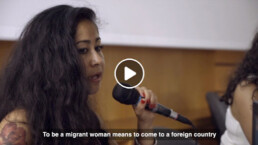
Voices of Resilience: short documentary
Migrant and refugee women face multiple barriers when arriving in the EU and the current political anti-migrant climate has made their situations direr. Experiences of gender-based abuse, exploitation at work and isolation have been exacerbated by the progressive erosion of migrant and women’s rights.
On International Migrant Day 2018, LAWRS launches the short documentary titled: “Voices of resilience: Migrant and Refugee women in Europe” which highlights the experiences of migrant women in the UK, Spain, Poland and Italy and sharing their experiences and calls for change.
The short documentary was made as part of the Women, Empowerment, Integration and Participation project (WEIP) run by LAWRS (UK), Differenza Donna (Italy), KARAT Coalition (Poland) and Red Acoge (Spain) and brought the voices and experiences of migrant and refugee women to the forefront. The documentary was first screened in November at the WEIP’s international conference in London, where more than 20 migrant and women organisations in Europe highlighted the role of migrant women’s lived experiences and provided recommendations to uphold their right to integrate and to live free of violence and discrimination.
Sophia Gomez Pelaez, a migrant woman in Spain, interviewed in the short documentary states:
“We come looking for other opportunities, especially as women as we are searching to cover family needs. However, it is difficult to find shelter as we often face rejection”
Moreover, Cathrine Nsamba, a migrant woman in Italy also interviewed (and photographed above) recommends:
“I was supported by the organisation to learn more and to understand more […]and my advice for women like me are to go inside leadership and campaign for these leaderships”
Finally, Alma Gatica, the WEIP Coordinator at the Latin American Women’s Rights Service stresses the importance of a migrant and gender perspective in our work.
“We, migrant women, have to get access to decision-making spaces where policies are discussed so we can fully participate in the host country: socially, politically and economically. We are the leaders of our own empowerment journey, both as migrants and as women”
Watch the full short documentary:
Co-funded by the Asylum, Migration and Integration fund of the European Commission

We can’t fight in the dark: Brazilian women facing violence
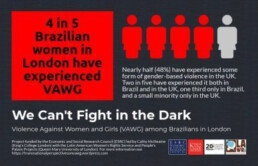
A research by the King’s College in partnership with LAWRS found out that VAWG among Brazilian women in London is “alarmingly widespread”, with 4 in every 5 Brazilian women in London have experienced some kind of violence.
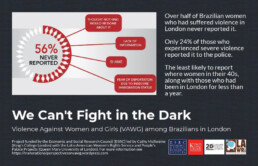
The study, published in March 2018, shed a light on cases of violence suffered by Brazilian women in London, provided data and offered policy recommendations to tackle the issue. According to the study emotional/psychological violence was the commonest type of violence experienced in London (48%), followed by physical violence (38%), with 14% experiencing sexual violence.
The study also found that cases of VAWG are intersectional as women of mixed race were more likely to experience violence (63%) than white women (44%). Insecure immigration status prevented women from coming forward and reporting the cases of violence to the police. Apart from highlighting the need for the Domestic Violence and Abuse (DVA) Bill to set standards for the protection of migrant victims’, some of the proposed solutions to prevent VAWG cases with Brazilian women are extending ‘recourse to public funds’ to domestic violence victims, specialist training for agency officers; and increased collaboration between support organisations and government authorities. The study reinforces the need for safe reporting mechanisms to be implemented as we campaign in Step Up Migrant Women.